

What Is The Percentage Of Girls That Wear Makeup? 2018
Male grooming is now a multi-billion pound worldwide industry, thank you to a growing number of men spending more on their appearance. Face wash, moisturiser, pore strips and hair removal products are now ordinarily featured in many a homo'southward bathroom cabinet – and now likewise, makeup.
Given that at that place is already a male Encompass Girl spokesmodel, whole dazzler sections in stores dedicated to men and articles in men'due south magazines extolling the virtues of products such every bit concealer, it seems likely that 2018 will be the year when men'south makeup goes mainstream.
Makeup companies have been trying to sell to men for decades. Simply the big claiming, as every marketer knows, is getting men to believe makeup can be manly. Some companies try to practice this by opting for a more manlier name – rebranding mascara to manscara, eyeliner to guyliner, foundation to tinted moisturiser. Others argue that make up gives men "masculine benefits" by contouring a more than pronounced jaw line, past attracting women, or by fixing so called "skin issues" (such as "patchy beards" and "lifeless eyes").
One of the more effective ways of getting men to buy make up is through male person makeup vlogging. In increasing numbers, men are providing makeup tutorials to other men (and sometimes women) via YouTube and other vlogging sites. Vlogs are very pop among younger audiences, with a contempo survey finding that over half of 16 to 24-year-olds, watched a vlog in the past month. Many were also much more probable to watch a vlog than the BBC or whatever other terrestrial channel.
Concealed adverts
Makeup is one of the almost pop vlogging topics – and vlogs about makeup by male YouTubers such as Patrick Starrr, James Charles and Jeffree Star take over 6m subscribers betwixt them. About xi% of those watching are male and almost 20% are under 17-years-old.
Makeup vlogging can be a lucrative business for men. Top makeup vloggers earn tens of thousands a pounds a month from their subscriptions alone. And many vloggers also bring out their own make upwardly brands and habiliment lines.
Companies will likewise work hard to get their products featured in these videos – either through freebies or official contracts with the vlogger themselves. In this style and then, makeup reviews are unlikely to be impartial if the company that makes a featured product is funding the video.
Merely while some of these videos do really say they are adverts rather than editorial content, such a disclaimer tends to be lost on the viewer. A recent survey in the US for example, found that few vlog viewers said they watched the videos for product ideas, only rather they watched for entertainment purposes.
False advertising
Of course, flattering lighting, strategic camera angles and even "living airbrushing" tin likewise brand the vlogger look more conventionally attractive than they are – significant that the actual capabilities of the make up are often exaggerated. Such deceit has in the past got other print media campaigns banned but vlogs seem to dodge such regulation.
And this means that adverts for products are now increasingly reaching what used to exist an unexploited market – men. Men too are at present feeling some of the same appearances pressures women have experienced for then long. As the feminist Jean Kilbourne said about the growing sexualisation of men and women's bodies in adverts:
This isn't the kind of gender equality anyone was fighting for.
For male makeup vloggers, breaking out of traditional gender roles is a positive stride, in a society where gender norms and expectations are firmly entrenched. But with this comes a cost: more pressures on men to look a certain (unachievable) manner.
Growing pressure
Enquiry shows that just like many women, men today are increasingly dissatisfied with their bodies. Many accept problematic relationships with food and are turning to protein shakes – and even steroids – in a desperate attempt to run into these pressures.
It's unsurprising that men are feeling this style, given that most images in pop magazines, dating and porn websites are of muscular lean, young men – who pretty much always have a full caput of hair.
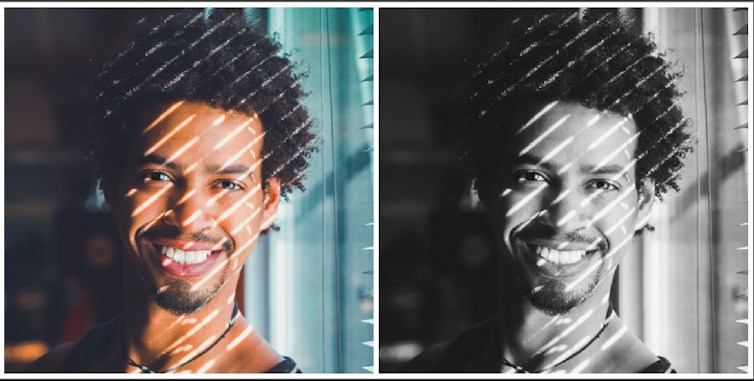
Withal, this enquiry also shows there's still a "gendered double standard" in these ideals where men have a little more "jerk room" circular their appearance than women. Specifically, there are still more realistic representations of men than women in popular media – call back of the Sean Connerys and Seth Rogans of the world.
It is likely though that male makeup volition erase this gendered double standard of advent – removing this "wiggle room". Adding to the pressures for men not simply to be muscular and tall, but as well to have no pores, wrinkles or skin blemishes.
So while male makeup may represent a way in which men are breaking out of gender norms, it also results in added force per unit area for men to wait "perfect" – to have flawless skin, potent eyebrows and sharp cheekbones. And as many women know, makeup has a dark side – the more yous wear it, the more you believe y'all could never be bonny without it.

What Is The Percentage Of Girls That Wear Makeup? 2018,
Source: https://theconversation.com/why-more-men-are-wearing-makeup-than-ever-before-88347
Posted by: witherswasseene.blogspot.com
0 Response to "What Is The Percentage Of Girls That Wear Makeup? 2018"
Post a Comment